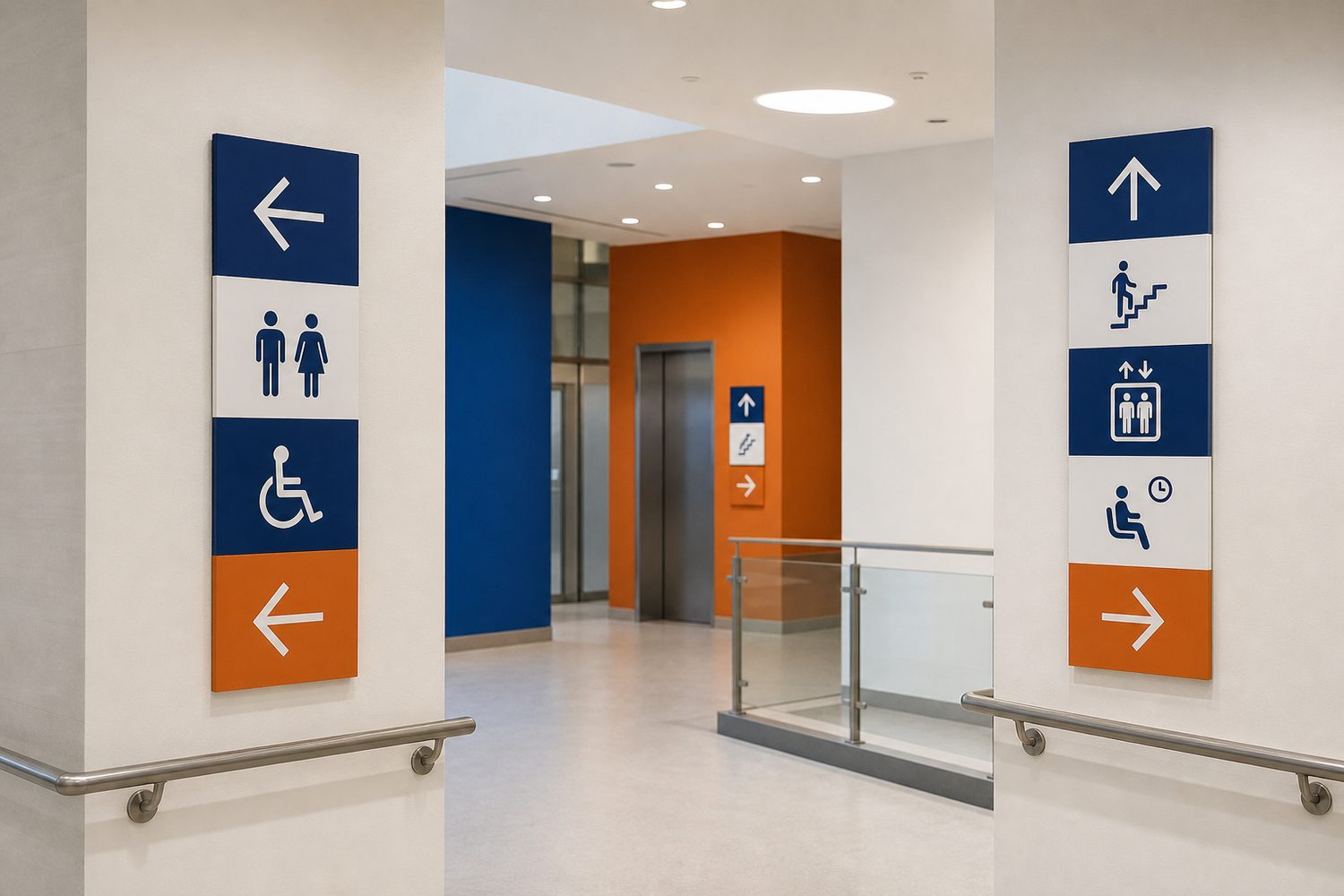
Choose representative journeys
List common first-time journeys by arrival mode and user group: parking to reception, transit stop to entrance, lobby to a department, room to exit, accessible entrance to destination, or delivery entrance to receiving. Include the return trip. Prioritize journeys with high volume, stress, safety consequence or repeated complaints.
Recruit an unfamiliar navigator
A staff member fills gaps from memory and may not notice ambiguity. Invite someone unfamiliar with the site, explain the destination but not the route, and ask them to narrate what they expect. Obtain permission before recording. Do not test in a way that interferes with care, security, traffic or emergency operations.
Record every decision point
At each junction, note available choices, information visible before the choice, distance and angle, obstructions, terminology and whether confirmation follows. Record hesitation and backtracking. A missing sign is one possible cause; architecture, lighting, naming or an earlier wrong cue may be more important.
Compare names across channels
Check websites, appointment messages, maps, parking labels, directories, room signs and staff language. “North Lobby,” “Main Entrance” and a street name may refer to the same place, forcing visitors to translate. Establish one public destination vocabulary and document approved abbreviations.
Inspect accessibility and inclusion
Review mounting, tactile and visual requirements under current applicable standards. Observe reach, clear floor space, glare, contrast, character form and whether a route actually remains accessible. Consider language, symbol familiarity, cognitive load and the needs of users under stress. Engage accessibility expertise and representative users rather than relying only on a checklist.
Look for temporary systems
Paper notices, easels, digital screens, construction detours and event signs often reveal where the permanent system cannot adapt. Record who creates them, how long they remain and whether they conflict. Develop a controlled temporary-sign kit and approval path instead of treating every temporary message as an exception.
Test the return journey
A destination sign does not guarantee that a user can leave, find parking, return to transit or locate the next appointment. Walk from destinations back to exits and transfer points. Confirmation should continue in both directions, with emergency egress handled according to its own governing requirements.
Prioritize causes and actions
Sort findings into naming, architecture, visibility, information hierarchy, placement, maintenance, digital communication and staff procedure. Identify quick corrections separately from system redesign. Rank by consequence and frequency, not by which sign looks oldest. Assign an owner, evidence, next action and verification method.
Respect the audit limit
An observational audit does not certify accessibility, fire code, traffic control or regulatory compliance. Requirements vary by jurisdiction and facility type. Confirm them with authorities and qualified specialists before changing a system.