Information architecture
Build a destination vocabulary and hierarchy. Resolve duplicate names, abbreviations, public versus staff terms and temporary destinations before laying out panels.
A successful route uses architecture, landmarks, naming, signs and confirmation together. Adding signs cannot repair every spatial problem.
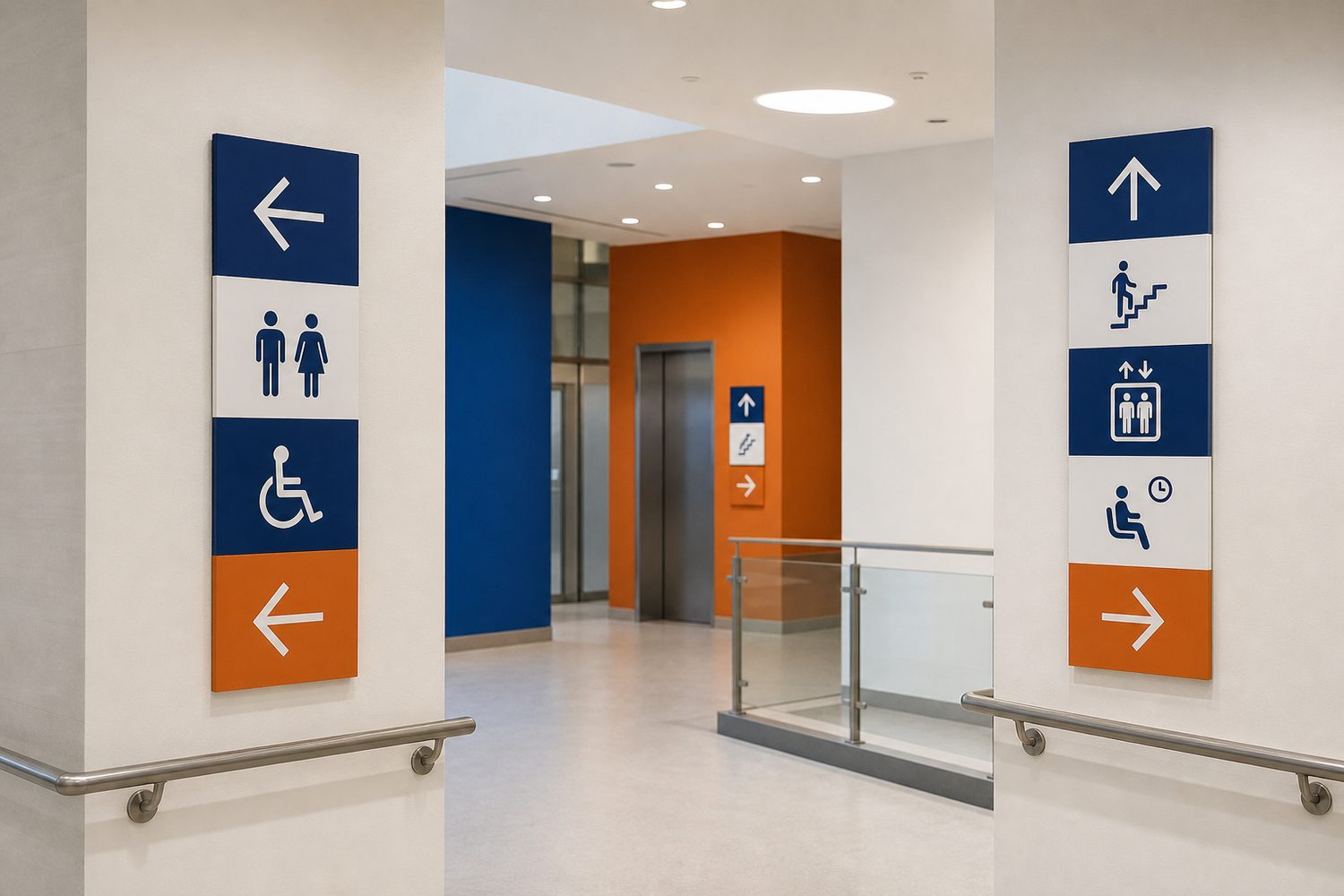
Build a destination vocabulary and hierarchy. Resolve duplicate names, abbreviations, public versus staff terms and temporary destinations before laying out panels.
Trace first-time trips from each arrival mode. Mark orientation points, decisions, long reassurance gaps, destination thresholds and the return journey.
Give only the information required at the current decision. A directory can hold overview detail; a directional panel should support the next move.
Place information before or at a decision, within a clear cone of vision. Avoid forcing a user to turn, reverse or block circulation while reading.
Keep names, arrows, colors and symbols stable. Reserve distinct treatments for real changes such as emergency information or restricted access.
Create a message schedule, location plan, sign-type family, change protocol and inventory owner so updates do not slowly break the system.
Ask someone unfamiliar with the site to narrate what they expect at every decision point. Record hesitation, backtracking, blocked views and conflicting names.